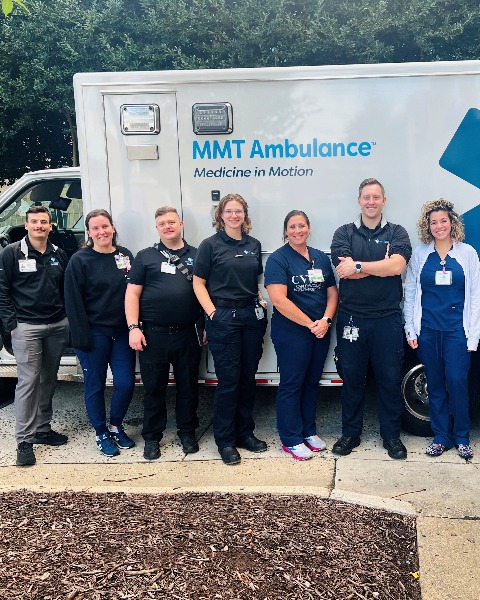
Poster 084: Implementation of an Interdisciplinary Critical Care Transport Team: Advancing Care for Patients with Complex Shock and Mechanical Support Devices
CVICU Clinical Director Falls Church, Virginia, United States
Disclosure(s):
Jennifer Coperos, BSN, RN, CCRN, NE-BC: No financial relationships to disclose
Background: Specialized critical care transport teams improve access to advanced therapies for patients with shock whose needs exceed local hospital resources. In Northern Virginia, patients with cardiogenic shock, severe ARDS, or multisystem organ failure experience transfer delays and transport risk, prompting implementation of an interdisciplinary Critical Care Transport Team program regionally.
Methods: The transport program was developed through interdisciplinary collaboration among CVICU nursing leadership, critical care intensivists, and respiratory therapy to address gaps in safe interfacility transport for high-acuity patients. Program integration occurred through coordination with the hospital transfer center, alignment with the existing pediatric critical care transport infrastructure, and collaboration with regional Emergency Medical Services (EMS) to ensure operational feasibility and safety.
An initial cohort of six critical care nurses and two respiratory therapists completed structured EMS ride-along experiences to gain familiarity with ambulance configuration, transport workflows, and safety protocols. This was supplemented by focused orientation addressing defined clinical roles, communication expectations, and contingency planning during transport. A standardized competency pathway was developed to validate transport readiness, including assessment and management of mechanical circulatory support (MCS) devices such as intra-aortic balloon pumps (IABP) and Impella systems, with emphasis on console transitions, device compatibility, and troubleshooting during transport.
Critical care physicians established predefined criteria for high-acuity transport, including cardiogenic shock, severe ARDS, evaluation for MCS, and ICU admission. Retrospective data collection included patient demographics, shock etiology, transport interventions, adverse events, and time intervals from initial page to hospital admission to evaluate program performance and safety.
Outcome: Since program initiation in October 2025, 32 interfacility transports have been completed across distances ranging from 30 to 84 miles within Northern Virginia. Ten transports involved patients supported with intra-aortic balloon pumps, and one involved an Impella device. Additional transports included patients with acute respiratory distress syndrome, pulmonary hypertension, septic shock, pulmonary embolism, and those undergoing evaluation for advanced therapies such as extracorporeal membrane oxygenation, left ventricular assist devices, and organ transplantation.
Three transports were cancelled following multidisciplinary Shock Team assessment due to concerns regarding transport safety or patient candidacy for advanced therapies. These cancellations underscored a structured, patient-centered decision-making process that prioritized safety and appropriateness of transfer, with collaboration among physicians, nurses, respiratory therapists, EMS partners, and communication with referring teams and families.
The mean time from initial page to return to the receiving hospital was 3 hours and 29 minutes. This timeframe encompassed EMS mobilization, patient stabilization and preparation at the sending facility, physician-directed clinical optimization, and coordination with receiving units for emergent interventions. No major transport-related adverse events were observed during the study period. Ongoing data collection will further evaluate the program’s impact on transport efficiency, time-to-therapy, morbidity, and mortality as transport volume increases.
Conclusion: The dedicated critical care transport program improved safety, efficiency, and coordination of high-acuity transfers across Northern Virginia, providing lifesaving care. Through specialized training and interdisciplinary collaboration, the program mitigated transport risk, reduced delays, and enhanced communication for patients requiring advanced cardiac and pulmonary support, strengthening regional partnerships and timely access.